Report on Mangrove Afforestation Initiatives by Coastal Aid Organisation
Introduction
Bangladesh’s coastal region faces severe natural disasters every year, including super cyclones, tidal surges, and riverbank erosion. The southwestern coastal belt especially Satkhira, Khulna, and Bagerhat districts is among the most vulnerable.
In this context, the Sundarbans is not just a forest; it is a lifeline for millions of coastal people. During cyclones, the dense mangrove forest acts as a natural barrier, reducing the force of tidal waves and winds, and protecting lives, livelihoods, and infrastructure in the coastal belt.

Importance of Mangrove Afforestation
Planting mangrove species along riverbanks and coastal chars outside the Sundarbans can create an additional natural shield for communities. As these trees mature, they play a crucial role in protecting against cyclones, tidal surges, and riverbank erosion.
Moreover, mangrove forests support local biodiversity, provide natural habitats for fish and other wildlife, and contribute to carbon sequestration playing a key role in climate change adaptation and mitigation.
Coastal Aid Organisation’s Initiative
To strengthen coastal resilience and restore the environment, Coastal Aid Organisation has been implementing mangrove afforestation programs across coastal areas.
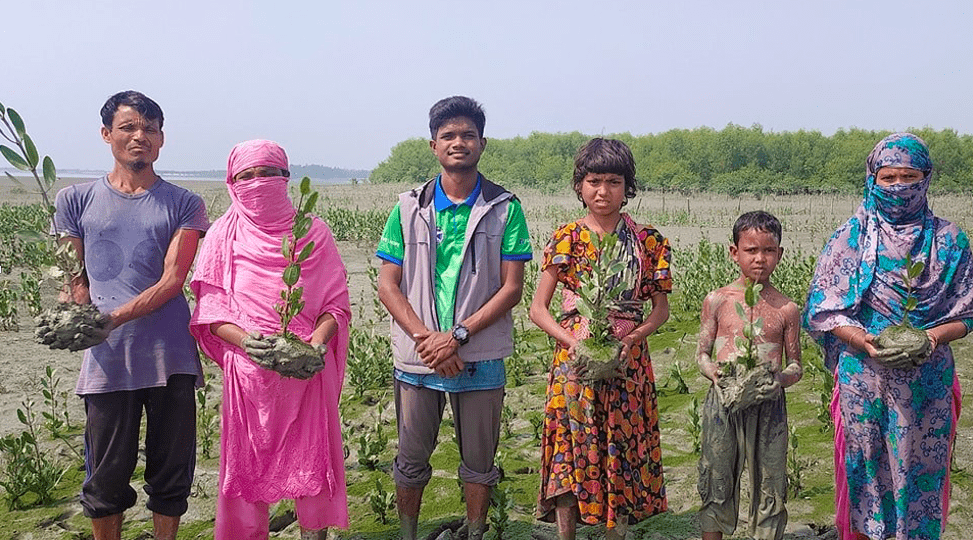
By engaging local communities, the organisation has been planting and maintaining mangrove gardens along coastal chars and riverbanks, mode-led after the Sundarbans ecosystem. Several mangrove gardens have already been established, and they are now acting as natural green shields during cyclones and helping to reduce riverbank erosion.

Community Engagement
Local communities particularly women and youth are actively involved in the afforestation process, including seedling plantation, maintenance, and forest protection. This participatory approach not only raises environmental awareness but also creates alternative livelihood opportunities for local people.
Expected Outcomes
- Strengthened natural barriers along the coast to enhance disaster resilience.
- Reduced impact of riverbank erosion and tidal surges.
- Restoration of local ecosystems and biodiversitys
- Increased community awareness and improved livelihood opportunities.

Conclusion
Mangrove afforestation is now a critical climate adaptation strategy for Bangladesh’s coastal belt. Coastal Aid Organization’s initiatives are empowering local communities to fight climate impacts and safeguard their future. With community participation, these green shields are contributing to building a sustainable and climate-resilient coastal region.